

To transfer embryos to another clinic, you sign release and consent forms at your current clinic, get written acceptance and a storage agreement from the new clinic, and arrange a qualified courier to move the frozen embryos between the two labs. The steps are the same whether you are moving across town, across the US or to another country, but the paperwork grows with distance.
This guide explains who authorizes the move, what each clinic needs, how long it usually takes, and where delays tend to happen.
Why people switch IVF clinics
People switch clinics for practical, medical or personal reasons, and it is a normal part of many fertility journeys.
- Relocation: a new job or a move to another state or country.
- A second opinion: after unsuccessful transfers, some patients want a fresh approach.
- Insurance or coverage changes: a new plan may only cover certain clinics.
- Surrogacy: the transfer has to happen at the clinic working with the gestational carrier.
- Clinic changes: a clinic closes, merges or changes its storage policies.
- Consolidation: embryos created at different clinics are brought together in one place.
Whatever the reason, your embryos can usually travel with you. The key is planning the move properly.
Who owns the embryos and who authorizes the release?
The people who signed the original IVF consent forms, usually the intended parent or parents, are the ones who must authorize release of the embryos.
If the embryos were created by a couple, most clinics require both partners to sign the release, even if the couple has since separated. If donor eggs or sperm were used, the original donor agreements and clinic consents may also affect what is allowed.
Rules on embryo disposition vary by state and country, and they change over time. If there is any question about who has the right to authorize release, speak with a reproductive attorney before the move. Your clinic will also tell you exactly whose signatures it needs.
Release and consent forms from your current clinic
Your current clinic will not release embryos until it has signed, verified release paperwork in hand.
Typical documents include:
- Embryo release or transfer authorization: names the receiving clinic and the courier, and lists the embryos being moved.
- Notarized signatures: many clinics require notarization to confirm identity.
- Specimen inventory: the number of embryos, the number of straws or devices, and their labels.
- Settled account: outstanding storage fees usually need to be paid before release.
Ask the clinic to send you its forms early. Some clinics need several business days just to process paperwork internally.
What the receiving clinic needs
The receiving clinic must formally agree to accept your embryos before anything ships.
Written acceptance
The new clinic’s lab confirms in writing that it will receive the embryos. Some labs review the freezing method and devices first to be sure they can store and thaw them safely.
A storage agreement
You will sign a new storage agreement and consents with the receiving clinic. This usually covers storage fees, renewal terms and what should happen to the embryos in different circumstances.
Records from the original lab
The receiving embryologists need detailed records to work with your embryos. These usually include:
- Embryo grading and day of freezing
- Vitrification method, media and storage devices used
- Any genetic testing results, if applicable
- Labeling details so each device can be matched to its records
- Infectious disease screening results for the patients
Having these records arrive before the embryos makes check-in at the new lab much smoother.
Coordinating both labs’ schedules
The move only works when both embryology labs are ready on the same day, with staff available to hand over and receive the specimens.
Labs are busy, and retrievals and transfers are scheduled tightly. Your courier will agree a pickup time with the sending lab and a delivery window with the receiving lab, then plan travel around both.
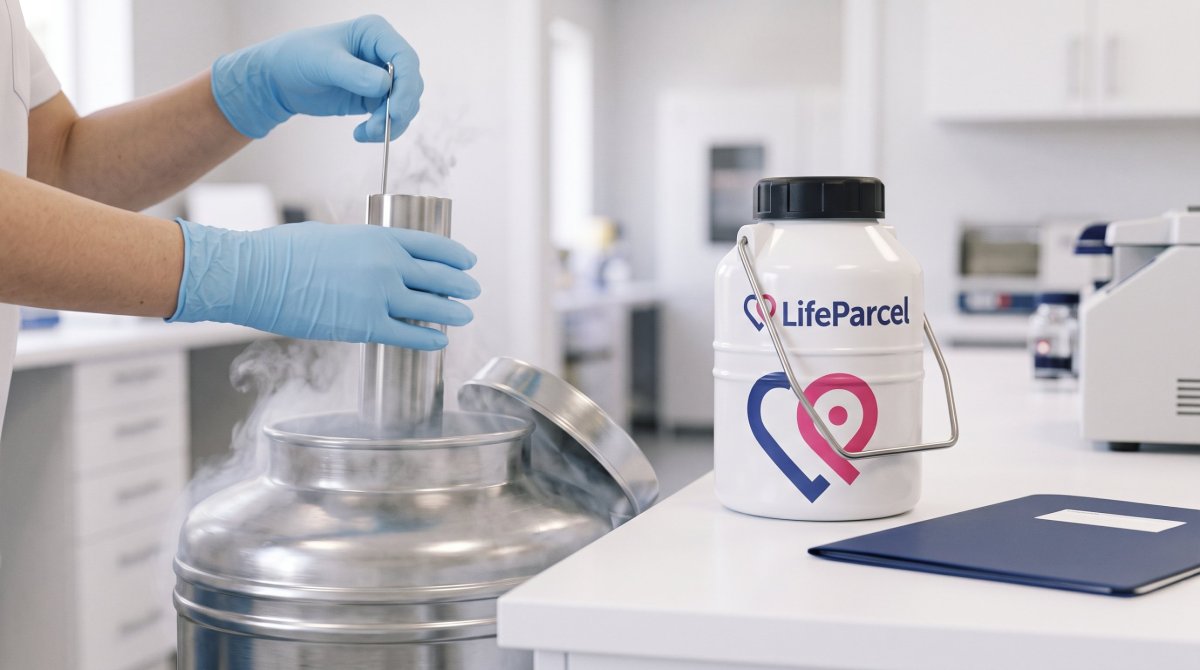
At LifeParcel, the shipper is charged with liquid nitrogen before pickup, and the embryos are transferred into it at the sending lab. A dry shipper holds -196°C for up to 21 days, which gives a safe margin if a delivery needs to shift. One dedicated courier keeps the shipper in sight from pickup to delivery, with 24/7 GPS and temperature logging. To understand the container itself, see how a liquid nitrogen dry shipper protects your materials.
How long it takes to transfer embryos to another clinic
The physical move usually takes 3–4 days door to door; the paperwork before it is what sets the overall timeline.
A general sequence looks like this:
- Decide and contact both clinics. Confirm the new clinic will accept your embryos.
- Collect and sign forms. Release forms, notarization, storage agreement and consents.
- Share records. The old lab sends embryology records to the new lab.
- Book the courier. The courier confirms dates with both labs.
- Pickup, transport and delivery. The embryos move and are checked into the new lab’s storage.
For a domestic move, paperwork can come together fairly quickly if both clinics respond promptly. International moves add import approvals and customs documents, which take more time. Our guide on how long fertility material transport takes goes into this in more detail.
What to ask your old clinic
A few direct questions at the start can prevent most surprises later.
- What forms do you need, and do signatures need to be notarized?
- Do both partners need to sign?
- Are there any outstanding storage fees or release fees?
- How much notice does your lab need before a pickup?
- Which days and times can your lab hand over specimens?
- Can you send embryology records directly to the new clinic?
- Are all my embryos stored in one tank, or across several locations?
- Do you have any requirements for the courier, such as documentation or insurance? (LifeParcel missions are insured for up to $1 million.)
Common delays and how to avoid them
Most delays come from paperwork and communication, not from the transport itself.
Missing signatures
One partner is traveling, or a notary appointment is hard to arrange. Plan signatures early, especially if partners live apart.
Unpaid storage balances
Many clinics will not release embryos with fees outstanding. Ask for a statement at the start.
Slow record transfers
The receiving lab may not confirm acceptance until it has reviewed the records. Ask both clinics to confirm when records have been sent and received.
Lab scheduling conflicts
Either lab may be fully booked on the planned day. Offering a few possible dates helps.
International paperwork and customs
Import and export requirements vary by country and can change. Confirm current rules with both clinics, and see our article on preventing customs problems. If you are moving overseas, our guide to transporting frozen embryos internationally covers the extra steps.
Commercial cryoshipping vs. hand-carry for clinic transfers
You can move embryos by commercial cryoshipping, where the tank travels as cargo through courier and air-cargo networks, or by hand-carry, where a courier travels with it the whole way.
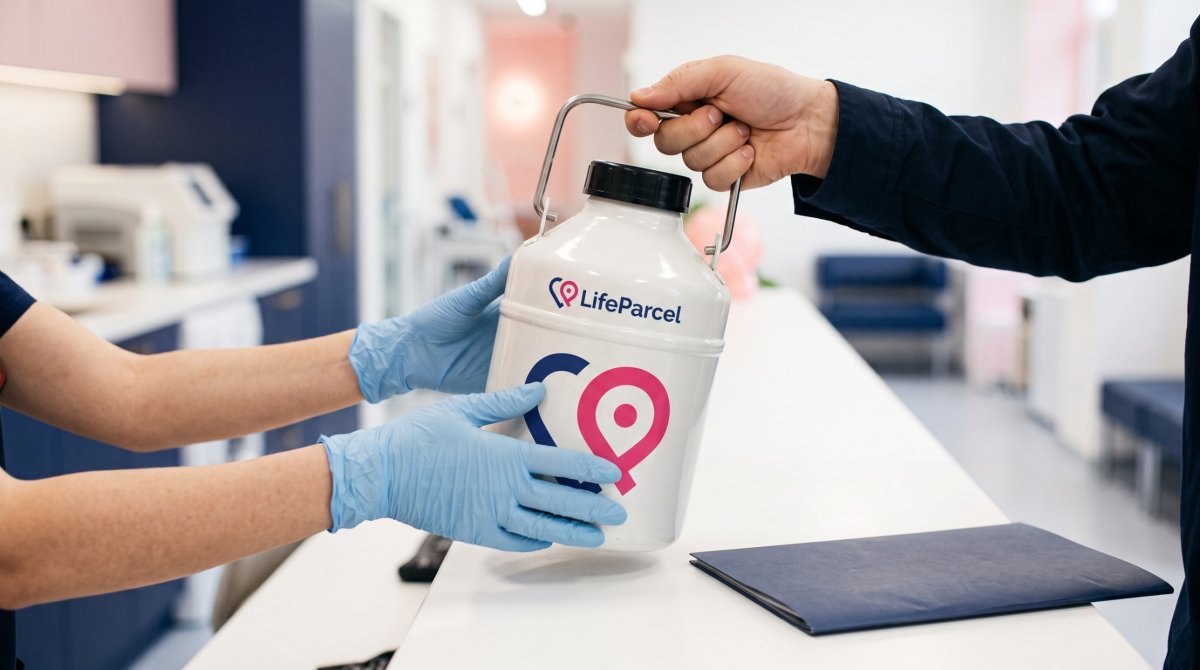
With hand-carry, the shipper stays with one person and is never put through X-ray screening. For embryos that represent months of treatment, many families prefer that level of control. Our article on chain of custody in IVF shipping explains what happens at each handover.
Frequently asked questions
Can I transfer embryos to another clinic without my partner’s consent?
Usually not. Most clinics require signatures from everyone who signed the original consent forms. If you and your partner disagree, speak with a reproductive attorney, as rules vary by state and country.
Do I need to be present when my embryos are moved?
No. The two labs and the courier handle the handover. Your role is to sign the forms, settle any fees and confirm the plan with both clinics.
Will moving my embryos affect their quality?
When embryos stay at -196°C throughout transport and are handled by trained lab staff at both ends, they remain in the same frozen state. Continuous temperature logging lets both clinics confirm conditions during the trip.
What affects the cost of moving embryos between clinics?
The main factors are route and distance, timing and urgency, paperwork, both clinics’ requirements and the number of shippers. See our FAQs for more.
If you are switching clinics and need to transfer embryos to another clinic, request a quote. We reply within 24 hours and can coordinate directly with both labs so the move fits their schedules.
Moving embryos to another state or another country? See how our embryo shipping service works, step by step.
Is the new clinic in another country? Our international IVF courier service hand-carries embryos between clinics worldwide, including an IVF courier to and from Mexico.
Follow LifeParcel on LinkedIn for fertility transport insights, mission stories and updates from our team.