

A typical embryo transport timeline runs about four to six weeks from the decision to move embryos to the day they arrive at the new clinic. Most of that time goes to clinic approvals, consents and permits. The transport itself usually takes only 3-4 days door to door.
Below is a week-by-week checklist. These are typical planning windows, not guarantees. Every clinic, route and country is different, and urgent cases can sometimes move faster.
The embryo transport timeline at a glance
The timeline breaks into four phases: choosing a clinic, completing paperwork, confirming logistics, and the mission itself.
- 4–6 weeks before: Choose your receiving clinic and ask for acceptance.
- 3–4 weeks before: Sign consent and release forms, and apply for permits if the move is international.
- 2 weeks before: Request a quote, confirm dates with both labs and complete payment.
- Mission week: Pickup, transport, delivery and the temperature report.
If you’re wondering about the transport duration itself rather than planning, our article on fertility material transport time covers that in detail.
4–6 weeks before: Choose your receiving clinic
Start by picking the clinic that will receive and store your embryos, and ask it to confirm in writing that it will accept them.
This is the step that shapes everything else. The receiving clinic decides what documents, tests and consents it needs before it will say yes.
Your checklist for this window
- Contact the receiving clinic. Ask if it accepts embryos from outside clinics and what its intake process looks like.
- Request embryology records from your current clinic, including the number of embryos, freezing method and storage device type.
- Share those records with the receiving lab so it can confirm it can work with them.
- Ask about a consultation. Some clinics want to meet you before they accept specimens.
- Note any deadlines, such as a planned transfer cycle or a storage contract renewal.
Why this step takes time
Clinic schedules, consultation slots and record reviews don’t always move quickly. Starting here gives you time to deal with questions before they become delays.
3–4 weeks before: Consents, release forms and permits
In this window, you complete the legal and administrative paperwork that lets one clinic release your embryos and the other accept them.
Domestic transfers
For a move within the US, this usually means signing the sending clinic’s release forms and the receiving clinic’s intake consents. If embryos were created with a partner, both partners typically sign. Some clinics require notarized signatures.
International transfers
International moves often add permits. Some countries require import approval from a health authority before embryos can enter. Some require specific documents from the sending clinic or translated records.
Rules vary by country and change over time. Confirm the requirements with the receiving clinic and, for legal questions, a reproductive attorney. Our step-by-step guide to transporting frozen embryos internationally explains the cross-border process.
Your checklist for this window
- Sign release forms at the sending clinic.
- Sign intake consents at the receiving clinic.
- Complete any infectious disease testing the receiving clinic requests.
- Apply for import permits if needed.
- Collect donor or surrogacy documents, if they apply.
Permits are often the longest-lead item on an international timeline. If one is required, start the application as early as the receiving clinic allows.
2 weeks before: Quote, dates and payment
About two weeks out, you lock in the logistics: get a quote, agree on dates with both labs and complete payment so flights can be booked.
You can request a quote earlier, of course. Many families do so at the start, simply to understand the process. But this is when details are usually firm enough to schedule.
Request a quote
LifeParcel replies to quote requests within 24 hours. Price depends on route and distance, timing and urgency, paperwork and permits, both clinics’ requirements and the number of shippers.
Confirm dates with both labs
The sending lab must be available to prepare and hand over the embryos. The receiving lab must be ready to check them in. We coordinate with both embryology teams to agree on pickup and delivery windows. We don’t run missions on Saturdays (Shabbat), so dates are planned around that.
Complete payment
Payment is made before the mission because flights are booked in advance. If plans change, rescheduling is free. Cancellation terms are listed in the terms and conditions sent with your quote.
Mission week: Pickup, transport and delivery
During mission week, a dedicated courier collects your embryos, travels with them and delivers them to the receiving lab, usually within 3-4 days door to door.
Before pickup
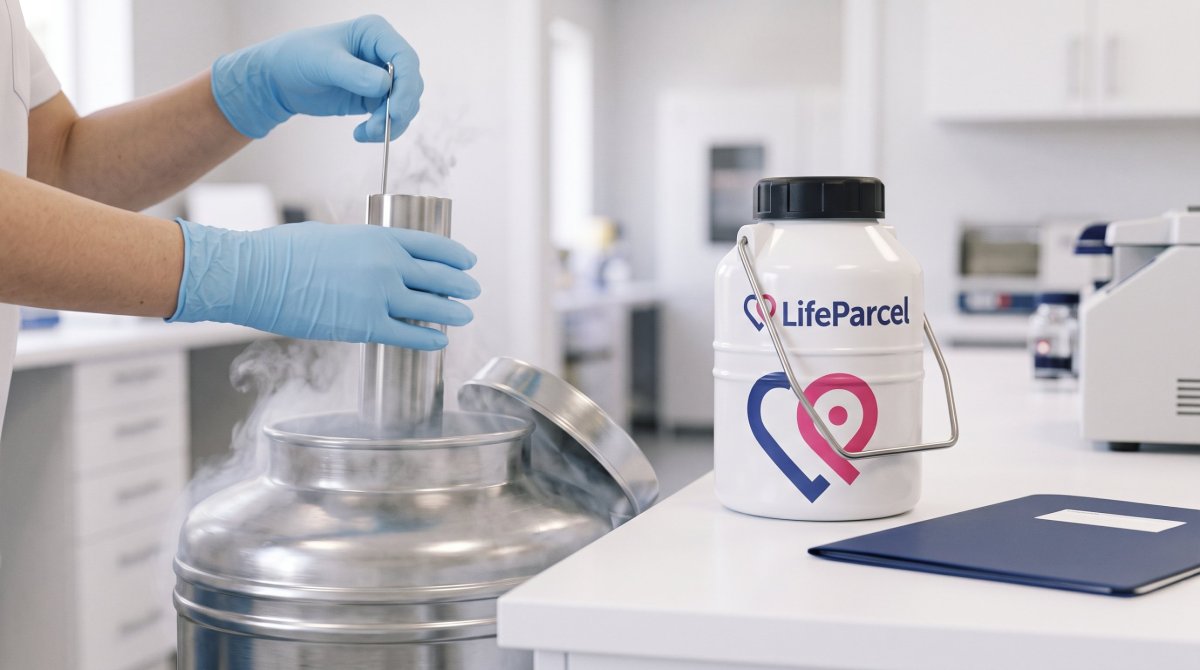
The dry shipper is charged with liquid nitrogen ahead of time. Once ready, it holds -196°C for up to 21 days, far longer than a typical mission needs. Learn more about how fertility material shipping containers work.
Pickup
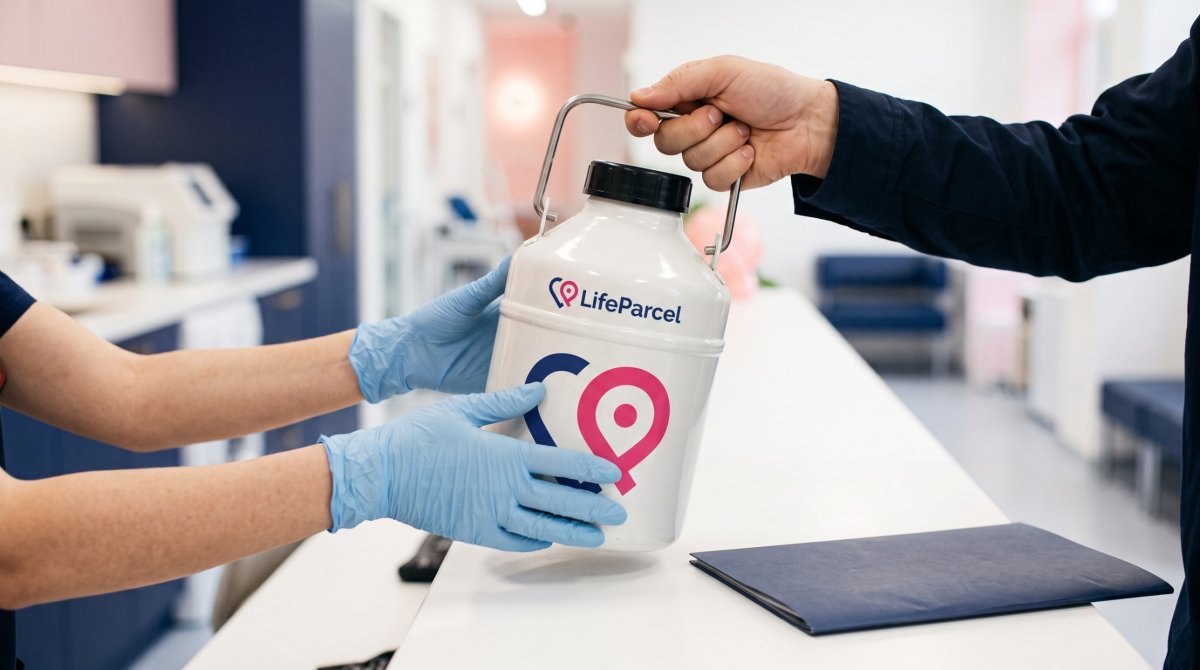
The courier arrives at the sending lab, where the embryologist checks the specimens against the paperwork and loads them into the shipper. From this point, one courier keeps the shipper in sight until delivery.
In transit
The shipper is tracked 24/7 with GPS and temperature logging. It never goes through X-ray screening. On international routes, the courier carries the documents and handles customs in person. LifeParcel has never had to open a tank at customs.
Delivery and temperature report
At the receiving lab, the embryologist checks in the specimens and moves them into storage. A temperature report for the journey is available on request. To see how each handoff is documented, read about IVF shipping chain of custody.
What can shorten or extend the timeline
The biggest variables are clinic response times and permits, not the flight.
Things that can speed it up
- A receiving clinic that already knows your sending clinic’s methods
- Records and testing that are already complete and current
- A domestic route with no import permit
- Both partners available to sign quickly
Things that can slow it down
- Import permits with long processing times
- Missing or outdated test results
- Required consultations with limited availability
- Translation or notarization of documents
- Holiday closures at either lab
Urgent cases
When time is short, such as a transfer cycle that is already scheduled, some steps can sometimes be compressed. Most families book us two to three weeks ahead, but when clinics and paperwork are ready, an urgent mission can sometimes be arranged within a day or two. It depends on how fast both clinics can process paperwork and whether a permit is needed. Tell us your deadline when you request a quote, and we’ll be honest about what’s realistic.
An illustrative example
This is a generic scenario, not a client story. A couple relocating from one US state to another decides to move their embryos in early spring. In week one, they contact their new clinic and send records. By week three, both clinics have their signed forms. In week four, they request a quote, confirm dates with both labs and pay. The mission runs the following week, and the embryos are in storage at the new clinic soon after.
Why LifeParcel plans this way
LifeParcel is embryologist-owned and was founded by embryologist Aharon Peretz, so our planning follows how embryology labs actually work.
We bring 15+ years of experience, 3,200+ missions, 150+ partner clinics and work in 32+ countries on 5 continents. Every mission has one dedicated hand-carry courier. When you’re ready to start your own timeline, request a quote.
Frequently asked questions
How long does the whole embryo transport process take?
Planning typically takes about four to six weeks, and the mission itself usually takes 3-4 days door to door. These are typical windows, not guarantees, and depend on clinics and permits.
Can embryos be moved faster in an emergency?
Sometimes. If both clinics can complete paperwork quickly and no permit is needed, the timeline can be shorter. Share your deadline when you request a quote.
What happens if my dates change after I pay?
Rescheduling is free with LifeParcel. Cancellation terms are in the terms and conditions sent with your quote.
Will I receive proof that temperature was maintained?
Yes. The shipper is logged 24/7, and a temperature report is available on request. More answers are on our FAQs page.
Ready to map out your own embryo transport timeline? Send us your clinics and target dates, and we’ll reply with a quote within 24 hours.
Follow LifeParcel on LinkedIn for fertility transport insights, mission stories and updates from our team.