


Planning to transport frozen embryos internationally?
With such high stakes, you need to be sure you’ve got all your Ts crossed — and we’re here to help you do that. We’re an embryologist-owned company with a mission to support aspiring parents and a 100% success rate completing 2,500+ missions across 32 countries.
Here, we’ll walk you through the steps involved in transporting frozen embryos overseas, as well as how to ensure your embryos arrive safely, on time, and under the right conditions.
1. Know the rules before you move anything
When looking how to transport frozen embryos internationally, the first thing to understand is that you’re dealing with highly regulated human tissue. That means paperwork, permissions, and strict compliance with each country’s laws. It may be tedious, but it’s worth investing the time to find out and check that you have everything needed, otherwise you may risk delays or denials.
Here’s what’s involved:
Clinic approval
Both the sending and receiving clinics must be licensed and willing to coordinate the release and receipt of your embryos. This typically involves:
- Signed consent and release forms
- Confirmation of storage compatibility and readiness
- Coordination on timing for pickup and delivery
International regulations
Every country has different rules for importing and exporting genetic material. Some may require additional permits or screening protocols. Common requirements include:
- Import/export permits (e.g. Canada, Australia, UK)
- Documentation proving non-commercial use (for personal IVF, not research)
- Special handling for infectious disease markers (e.g. HIV+, hepatitis)
Approval from national health authorities (such as the HFEA in the UK or FDA in the US)
Customs clearance
Unlike standard shipments, IVF transport requires special handling, medical documentation, and proof that the materials are for personal, non-commercial use—otherwise, they can be held or denied entry.
2. Obtain a dry shipper
Embryos are stored in liquid nitrogen at -196°C, a temperature that keeps them in a stable, suspended state. Even slight warming—even for a short time—can compromise their structure and reduce the chances of successful implantation.
To maintain this temperature, you must use specialized equipment called a dry shipper—a medical-grade, insulated container pre-cooled with liquid nitrogen vapor. These shippers are validated to hold the necessary temperature for up to 21 days, well beyond the typical 3–4 day transport window. Your clinic may be able to give you information on where you can obtain one.
3. Plan the transport, carefully considering the timing
When postcards get delayed, it’s no big deal — but with frozen embryos, it’s a different story. It’s crucial to plan well, and well in advance.
Here’s what you should keep in mind:
Coordinate clinic schedules first
Before booking any transport, confirm:
- Pickup availability: When can your sending clinic prepare the embryos and load the dry shipper?
- Delivery requirements: What days/hours does your receiving clinic accept deliveries?
- Processing time: How much advance notice does each clinic need?
- Backup contacts: Who can you reach if there are delays outside normal business hours?
Account for dry shipper limitations
Dry shippers maintain proper temperature for 7-10 days depending on the model Federal Aviation AdministrationRoyale International, but don’t assume you have the full duration. Factor in:
- Charging time before pickup (usually 24 hours)
- Actual transport time (typically 2-10 days internationally)
- Buffer time for unexpected delays
- Temperature monitoring requirements throughout transport
Map out your complete route and timing
Document every step of your journey:
- Flight connections and layover times (build in extra buffer time)
- Border crossings and customs inspection points
- Ground transport time from airports to clinics
- Clinic operating hours at both pickup and delivery locations
- Weekend/holiday schedules that could create delays
Prepare comprehensive documentation packages
You’ll need multiple copies of:
- Medical letters from both sending and receiving clinics
- Export/import permits (required for many countries)
- Customs declaration forms stating “non-commercial medical use”
- Your treatment consent forms and patient identification
- Insurance documentation for the shipment value
- Emergency contact information for all parties involved
Build in contingency planning
Have backup plans for:
- Missed connections or flight cancellations
- Customs delays or additional documentation requests
- Clinic closures due to emergencies or holidays
- Temperature monitoring failures or equipment issues
4. Understand the special care involved in transporting embryos internationally
When it comes to frozen embryo transport, every detail matters. These precious specimens have specific needs that must be met throughout their journey, and knowing what’s required will help you make the best decisions for your situation.
They must be protected from radiation exposure
Airport security typically requires all luggage and shipments to go through X-ray scanners—but exposing frozen embryos to radiation, even briefly, may risk damaging their delicate DNA structure. If you’re hand-carrying your embryos, you’ll need to:
- Contact airport security in advance to request special screening procedures
- Bring medical documentation explaining the nature of your shipment
- Allow extra time at security checkpoints for manual inspection
- Research specific policies at each airport on your route, as procedures vary
- Have backup documentation ready if security personnel aren’t familiar with cryogenic medical transport
They demand continuous temperature monitoring
Your dry shipper must maintain -196°C throughout the entire journey. This means:
- Using a dry shipper with built-in temperature monitoring capabilities
- Checking temperature readings regularly during transport
- Understanding what constitutes a dangerous temperature fluctuation
- Having emergency protocols if temperature begins to rise
- Knowing how to respond to equipment malfunctions mid-journey
They must avoid unnecessary handoffs and handling
Every transfer between different handlers increases risk exponentially. If you’re managing transport yourself:
- Minimize the number of people who handle your dry shipper
- Never let it out of your sight during airport transfers
- Carry it as carry-on luggage rather than checking it
- Ensure anyone helping you understands proper handling procedures
- Have clear protocols for layovers and connections
They need specialized equipment maintenance
Understanding your dry shipper is critical:
- Learn how to properly charge and prepare the container
- Understand normal vs. concerning performance indicators
- Know how to troubleshoot common issues
- Have backup plans if equipment fails during transport
- Understand the limitations and lifespan of your specific model
The stress-free way to transport frozen embryos internationally
If the above sounds overwhelming, that’s because it can be — with such high stakes, a single mistake or oversight can have life-altering consequences. While some aspiring parents choose to handle embryo transport themselves, many find that the stress is too much to handle during an already intense time.
That’s why you may consider bringing in trained experts such as our couriers at LifeParcel.
With over 2,500 successful missions across 32+ countries and a 100% success rate, we’ve dedicated ourselves to perfecting every aspect of international embryo transport. Our embryologist-owned company understands both the science and the deeply personal nature of what we’re carrying.
We take everything off your shoulders, so you can focus on what really matters: building your future family.
1. Clinic coordination made simple
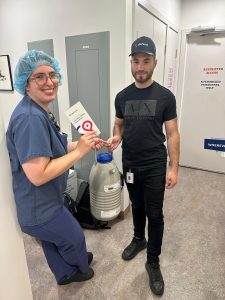
At LifeParcel, we manage this entire process on your behalf to keep things smooth and stress-free. We reach out to both clinics, coordinate timing and requirements, and loop you in so you’re never left wondering what’s happening behind the scenes. Our team has established relationships with fertility clinics worldwide, making the coordination process seamless.
2. International regulations handled expertly
LifeParcel is experienced in navigating country-specific regulations and fills out all necessary documents to ensure smooth, compliant transport. We stay current on changing requirements across all the countries we serve, so you don’t have to research complex import/export laws or worry about missed paperwork.
3. Customs clearance without the stress
At LifeParcel, our couriers personally declare your embryos at customs and carry all required paperwork to ensure smooth, expedited clearance. We handle the entire process in advance so you don’t have to worry about delays, documentation issues, or unexpected questions at the border. Our experience means we know exactly what each customs authority expects.
4. Medical-grade dry shippers with real-time monitoring
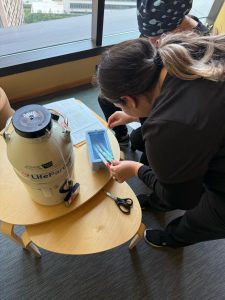
At LifeParcel, every shipper is pre-tested and fitted with a real-time digital temperature logger, so we can monitor conditions continuously during transit and give you peace of mind that your embryos are safe. You’ll receive updates throughout the journey, and our 24/7 support team can respond immediately if any issues arise.
5. Zero radiation exposure, guaranteed
That’s why LifeParcel never sends your embryos through standard scanning. Instead, our couriers hand-carry your dry shipper and arrange non-X-ray screening at every security checkpoint. We work directly with airlines and border authorities to ensure your parcel is treated as sensitive medical cargo and kept safe from unnecessary exposure.
6. Unbroken chain of custody
That’s why LifeParcel assigns one trained, vetted courier to manage your shipment from start to finish—no third parties, no transfers. Your embryos are never left unattended, stored in a warehouse, or passed between carriers. From the moment we pick them up at your clinic to the moment we deliver them, your parcel stays in the same trusted hands.
7. 24/7 support and communication
Throughout your transport, you’ll have direct access to your dedicated concierge and real-time updates on your shipment’s progress. Unlike standard shipping services where you’re just a tracking number, we provide personalized attention and immediate support whenever you need it.

Through over 2,500 successful missions with a 100% success rate, LifeParcel has refined every aspect of international embryo transport. We understand that this isn’t just a shipment—it’s your future family. That’s why we’ve built our entire service around giving you complete peace of mind during this critical step in your fertility journey.
Want to take the stress out of frozen embryo transport? Request a quote or call us at +1-866-370-6577.