


When couples begin IVF or fertility preservation, they quickly learn that the journey is filled with information. Some of it is medical. Some of it is emotional. And some of it comes from friends, online forums, or stories shared in waiting rooms. In that mix, it’s easy for misconceptions to grow—especially when it comes to one of the most sensitive steps in the process: transporting frozen embryos, eggs, or sperm.
Fertility transport is not something most people ever think about until they need it. And when they do, it often feels mysterious. The truth is, this “mystery” creates space for myths, assumptions, and unnecessary anxiety. The good news is that once couples understand what fertility transport truly involves, they often feel calmer, more empowered, and better prepared to make decisions that protect their future.
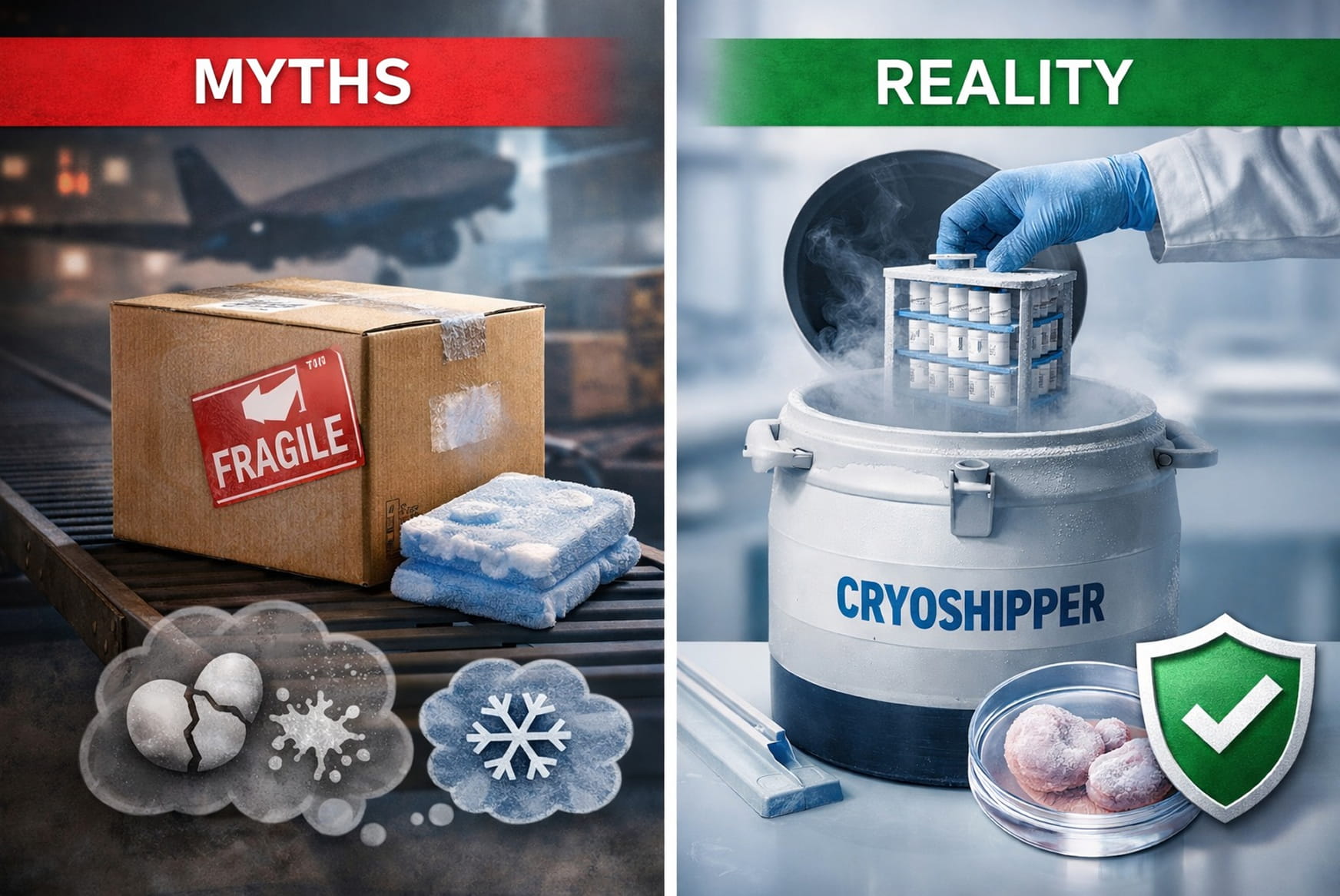
One common myth is that fertility transport is basically the same as shipping any other medical package. In reality, reproductive materials are uniquely sensitive. They must remain in a stable cryogenic environment and be handled with strict chain-of-custody protocols. This is not a standard courier job, and it’s not something that should be treated like routine logistics. Fertility transport requires specialized knowledge, equipment, and planning—because what’s being transported is not replaceable.
Another myth is that “as long as it’s frozen, it’s safe.” Freezing is essential, but the conditions around freezing matter just as much. Cryogenic stability isn’t only about cold temperature—it’s about maintaining the correct environment without disruption, protecting the container from mishandling, and ensuring the materials remain secure throughout the entire journey. Couples often assume that the only risk is temperature fluctuation, but the reality is that transport safety also depends on supervision, route planning, timing, and accountability.
A third myth is that delays are rare and won’t affect anything. The truth is that delays can happen in any travel environment. Flights change, schedules shift, and unexpected complications appear. The difference isn’t whether delays happen—the difference is whether the transport plan is built to handle them safely. This is one reason specialized fertility courier services exist. LifeParcel is designed to manage fertility shipments with professional oversight, anticipating challenges and minimizing risk through careful planning and constant responsibility.
Many couples also believe that tracking and updates are only a “nice bonus.” In reality, clarity and communication can be a major emotional stabilizer during fertility treatment. When couples feel like they don’t know what’s happening, their minds naturally fill the gap with fear. When they know there is a clear plan, a responsible team, and a direct point of contact, they often feel less tension and more trust in the process. LifeParcel supports this by coordinating directly with clinics and keeping the process structured and transparent, so couples aren’t left wondering if they missed something important.
Another myth that quietly increases anxiety is the belief that “the couple has to manage everything themselves.” Many people assume that they must be the ones coordinating between clinics, handling every document, and constantly checking on the timeline. But fertility treatment is already emotionally demanding. Couples should not have to carry the entire logistical burden on top of everything else. The reality is that a professional fertility transport team can take on that responsibility, reducing stress and freeing couples to focus on what truly matters: staying connected, supported, and emotionally steady.
Some couples worry that choosing professional hand-carry transport is unnecessary or “too much.” But the truth is that for many patients, hand-carry supervision isn’t about luxury—it’s about accountability. When reproductive materials are hand-carried and continuously supervised, it reduces the fear of mishandling and reinforces the idea that every step is being treated with the seriousness it deserves. LifeParcel’s hand-carry approach is built around continuous responsibility, because couples deserve to know their materials are never treated like ordinary cargo.
Finally, there’s a myth that fertility transport is purely technical, and that emotions should stay out of it. But anyone who has lived through IVF knows that emotions are part of every step. Transport isn’t just moving a container from one clinic to another. It’s moving hope. It’s moving time. It’s moving a future that couples have worked incredibly hard to reach. The emotional weight of that reality is not something to dismiss—it’s something to respect.
When couples understand the truth behind fertility transport, the process becomes less frightening. Not because it becomes “simple,” but because it becomes clear. Clarity replaces confusion, structure replaces chaos, and trust replaces constant worry. That’s what couples deserve during one of the most important journeys of their lives.
LifeParcel exists to bring that clarity and structure to fertility transport. By offering specialized cryogenic handling, professional coordination, and hand-carry supervision, LifeParcel helps protect reproductive materials—and just as importantly, helps protect couples from the unnecessary emotional strain that uncertainty can create. Because in fertility care, peace of mind isn’t a luxury. It’s part of the support system.