

More people than ever are choosing fertility preservation—and for good reason. Whether it’s cancer patients protecting their reproductive future before treatment, professionals delaying parenthood, or couples creating embryos for IVF, the need for reliable fertility material transport keeps growing.
But here’s what many don’t realize: preservation is only half the equation. Getting your frozen materials safely from point A to point B requires specialized expertise, equipment, and protocols that ordinary parcel shipping simply can’t provide.
As an embryologist-owned transport company with over 3,200 successful missions, we’ve seen every scenario imaginable. This guide covers everything you need to know about safe fertility material shipping—from the science behind cryopreservation to choosing the right transport partner.
What is fertility preservation?
Fertility preservation involves freezing and storing reproductive materials—eggs, sperm, or embryos—at ultra-low temperatures for future use. This process allows individuals to maintain their reproductive potential regardless of age, medical treatments, or life circumstances.
Who benefits from fertility preservation?
- Cancer patients: Chemotherapy and radiation can severely impact fertility
- Military personnel: Deployment or dangerous assignments may delay family planning
- Career-focused individuals: Those choosing to delay parenthood for professional reasons
- People with genetic conditions: Who want to use preimplantation genetic testing
- LGBTQ+ individuals and couples: Building families through assisted reproduction
- Those with declining fertility: Age-related or medical fertility concerns
For all of them, the frozen material often has to move at some point: to a long-term storage facility, to a new clinic after a move, or to the clinic where treatment will happen. That is where cryogenic transport comes in.
The science of cryopreservation
Cryopreservation freezes biological materials at -196°C (the temperature of liquid nitrogen) to essentially stop time at the cellular level. At this temperature, all metabolic processes halt, preserving eggs, sperm, and embryos in their current state indefinitely.
How the freezing process works
Vitrification: The modern standard for egg and embryo freezing. This “flash-freezing” process prevents ice crystal formation that could damage cells.
Slow freezing: Traditional method still used for some sperm samples, involving gradual temperature reduction.
Cryoprotectants: Special solutions that protect cells during the freezing process by preventing ice crystal damage.
The key insight: at a stable -196°C, frozen materials can stay viable for many years. What puts them at risk is not time in storage but temperature changes, which is why the conditions during transport matter so much.
Why transport matters as much as storage
Many couples focus heavily on choosing the right fertility clinic but overlook transport logistics. Yet moving frozen materials between facilities presents unique challenges that can compromise years of investment in a single trip.
The critical factors in fertility material transport
Temperature stability: Even brief warming above -190°C can cause irreversible damage. Ice crystals form, cell membranes rupture, and viability plummets.
Time sensitivity: While properly frozen materials can survive weeks in transport, delays increase risks and stress for everyone involved.
Chain of custody: Each handoff between carriers increases the chance of mishandling, temperature exposure, or loss.
Regulatory compliance: International transport requires specialized documentation and customs procedures that ordinary parcel carriers aren’t equipped to handle.
Essential requirements for safe transport
Not all transport services are created equal. Here’s what safe fertility material shipping requires:
Specialized equipment
- Medical-grade dry shippers: Maintain -196°C for extended periods (we use containers rated for 21 days)
- Real-time monitoring: Continuous temperature and location tracking with immediate alerts
- Backup systems: Contingency plans for equipment failure or delays
Expert handling
- Trained couriers: Personnel with specialized knowledge of cryogenic materials
- Chain of custody protocols: Unbroken supervision from pickup to delivery
- Emergency procedures: Clear protocols for addressing problems immediately
Regulatory expertise
- International documentation: Proper permits and declarations for border crossings
- Customs relationships: Established procedures for expedited clearance
- Compliance knowledge: Understanding of fertility material transport regulations across different countries
The LifeParcel difference
As an embryologist-owned fertility transport company, we understand both the science and the stakes involved in every mission.
Our approach
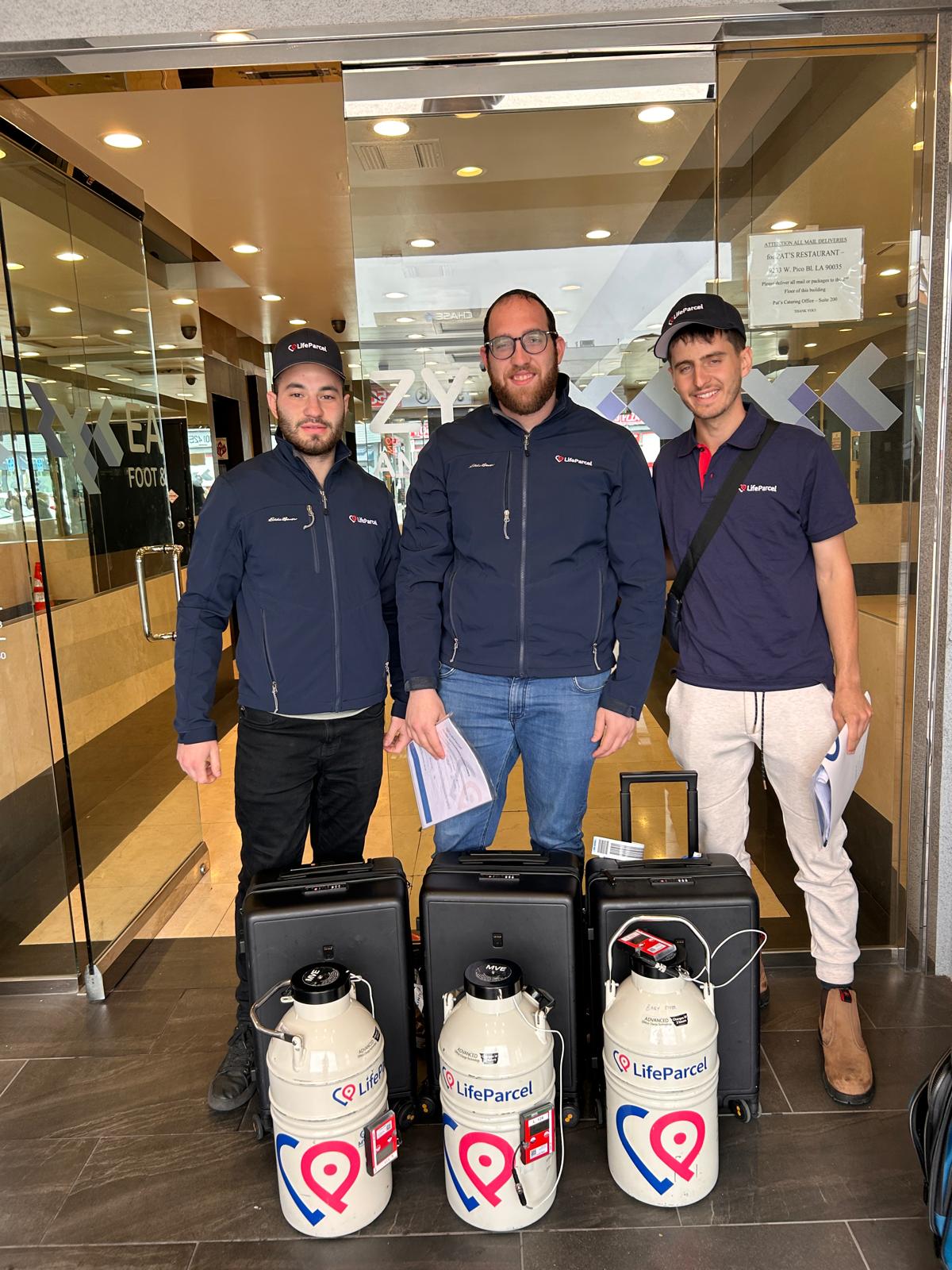
- Hand-carry service: Your materials never leave our courier’s direct supervision
- Extended container capacity: 21-day temperature stability provides substantial safety buffers
- 24/7 monitoring: Real-time tracking with immediate response to any issues
- Dedicated concierge: Personal support throughout your transport journey
- Proven record: 3,200+ missions across 32+ countries
Making the right choice
Fertility preservation represents a significant investment—medically, financially, and emotionally. The transport component, while often an afterthought, can determine whether that investment pays off.
Commercial cryoshipping services, which send the tank as cargo with no one traveling with it, may lack the continuous supervision, training, and protocols that fertility materials require. The stakes are simply too high for anything less than expert, dedicated transport.
Frequently asked questions about cryogenic transport
What is cryogenic transport?
Cryogenic transport is the movement of frozen eggs, sperm and embryos in liquid nitrogen dry shippers that keep them at -196°C, so they stay viable from one clinic or storage facility to another.
Are fertility materials exposed to X-rays with LifeParcel?
No. Specimens are never put through X-ray screening. Our courier arranges screening without X-ray at every airport on the route.
What happens if there is a delay?
Our dry shippers hold -196°C for up to 21 days, several times longer than a typical 3–4 day mission, and the courier stays with the shipper throughout. A cancelled flight means rebooking, not risk to your specimens.
Can cryogenic transport be used internationally?
Yes. We have carried fertility materials across 32+ countries on 5 continents, including routes that need import permits and customs paperwork.
Your next steps
If you’re planning fertility preservation or need to transport existing materials, we’re here to help navigate the process. Our embryologist-led team provides the scientific expertise and logistical experience to ensure your materials arrive safely, no matter where your journey takes you.
Contact us at +1-866-370-6577 or request a personalized quote to discuss your specific transport needs. Because when it comes to your future family, every detail matters.
Follow LifeParcel on LinkedIn for fertility transport insights, mission stories and updates from our team.