


Reproductive journeys are deeply personal, emotional, and often full of logistical challenges.
For many couples navigating IVF and fertility treatments, the technical steps — like transporting reproductive materials — can feel overwhelming. But how you approach these logistical moments together as a couple can make a meaningful difference in your overall experience.
In this guide, we’ll explore key areas where logistics meet emotion, and offer insights to help you stay connected and supported throughout the process.
Understanding the Logistics Together
Fertility treatments involve more than the medical procedures themselves.
From choosing clinics to scheduling transfers and managing travel arrangements, each step can feel like another hurdle on your path to parenthood. Studies show that uncertainty in procedures like IVF transport can significantly increase stress for couples — but shared understanding and planning can help mitigate anxiety.
By discussing expectations early — including how transport works, what hand-carry services provide, and what the timeline might look like — you create alignment and emotional support before the logistics even begin. LifeParcel+1
Communication is Key — Before, During, and After
When facing medical logistics, clear communication between partners is crucial. It helps to establish:
- Roles — who handles travel research, who communicates with clinics, who manages documentation.
- Preferences — how much detail each partner wants about the transport process.
- Emotional check-ins — regular discussions about how you’re both feeling leading up to transfer dates.
Sharing responsibilities doesn’t mean overloading one partner — it means planning together so that no one feels isolated. Couples who divide tasks in ways that play to each other’s strengths often feel more in control and connected.
The Emotional Side of Waiting and Uncertainty
Waiting is one of the hardest parts of IVF, and waiting for timelines like international transport can intensify stress. Patients often describe this period as a limbo — hopeful, anxious, and filled with “what-ifs.”
Here are a few strategies couples have found helpful:
- Shared routines: Create small daily routines to stay grounded, like morning walks or evening conversations about non-treatment topics.
- Checkpoints together: Schedule moments during the transport window to touch base, regardless of updates.
- Mutual reassurance: Offer space for each other to express fears without the need to “fix” them.
These approaches help create a shared rhythm, rather than leaving one partner to navigate the emotional load alone.
Aligning Expectations Around Outcomes
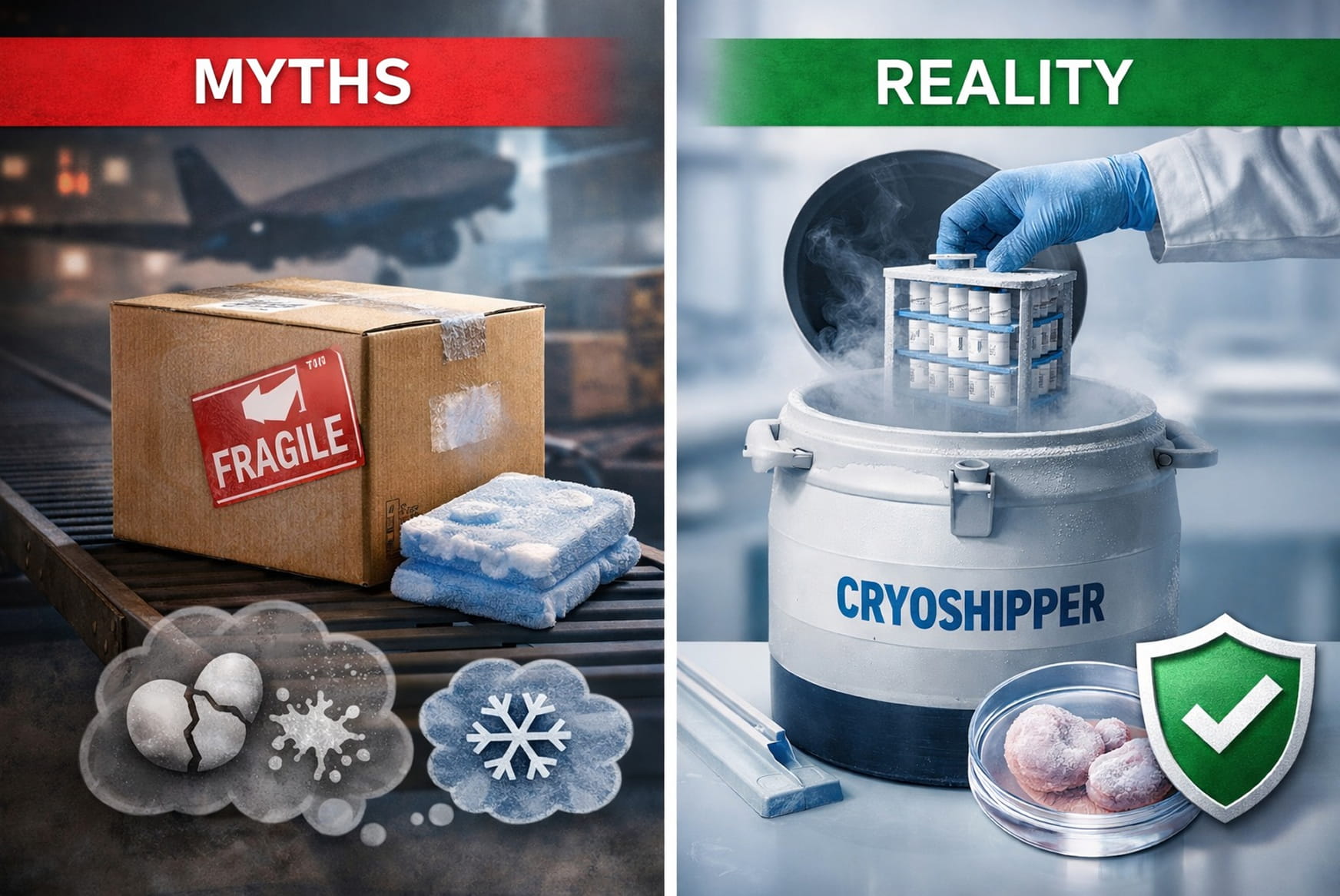
It’s important to remember that logistics like transport are part of a bigger picture. While hand-carry services and specialized transport — like those that maintain cryogenic conditions — greatly reduce risks, they are not guarantees of outcome. LifeParcel
Discussing expectations candidly as a couple — including “hope goals” and “realistic goals” — builds trust and prepares you to face whatever comes next with a united front.
Finding Strength in Partnership
Every part of a fertility journey can be an opportunity to grow together. Logistics, travel arrangements, clinic communications, and waiting periods are as much a part of the experience as the medical procedures themselves.
By facing these moments as a team, you not only share the workload — you share the emotional journey. That bond becomes part of your story, no matter the outcome.